 iSAYSO
The Electoral System Must be Audited for there to be any confidence in a election outcome.
New Zealand’s Electoral System and the Myth of Consensus
New Zealand’s Electoral System and the Myth of Consensus
Why Changing the Rules of Democracy Is Now Almost Impossible
BY NIGEL GRAY INDEPENDENT INVESTIGATOR 4 OCTOBER 2026
New Zealanders often assume that if a political party wins office, it can “fix” the electoral system. After all, Parliament is sovereign. Electoral law is statutory. A government with a majority can pass whatever legislation it likes.
But this assumption collapses the moment you examine how New Zealand actually works.
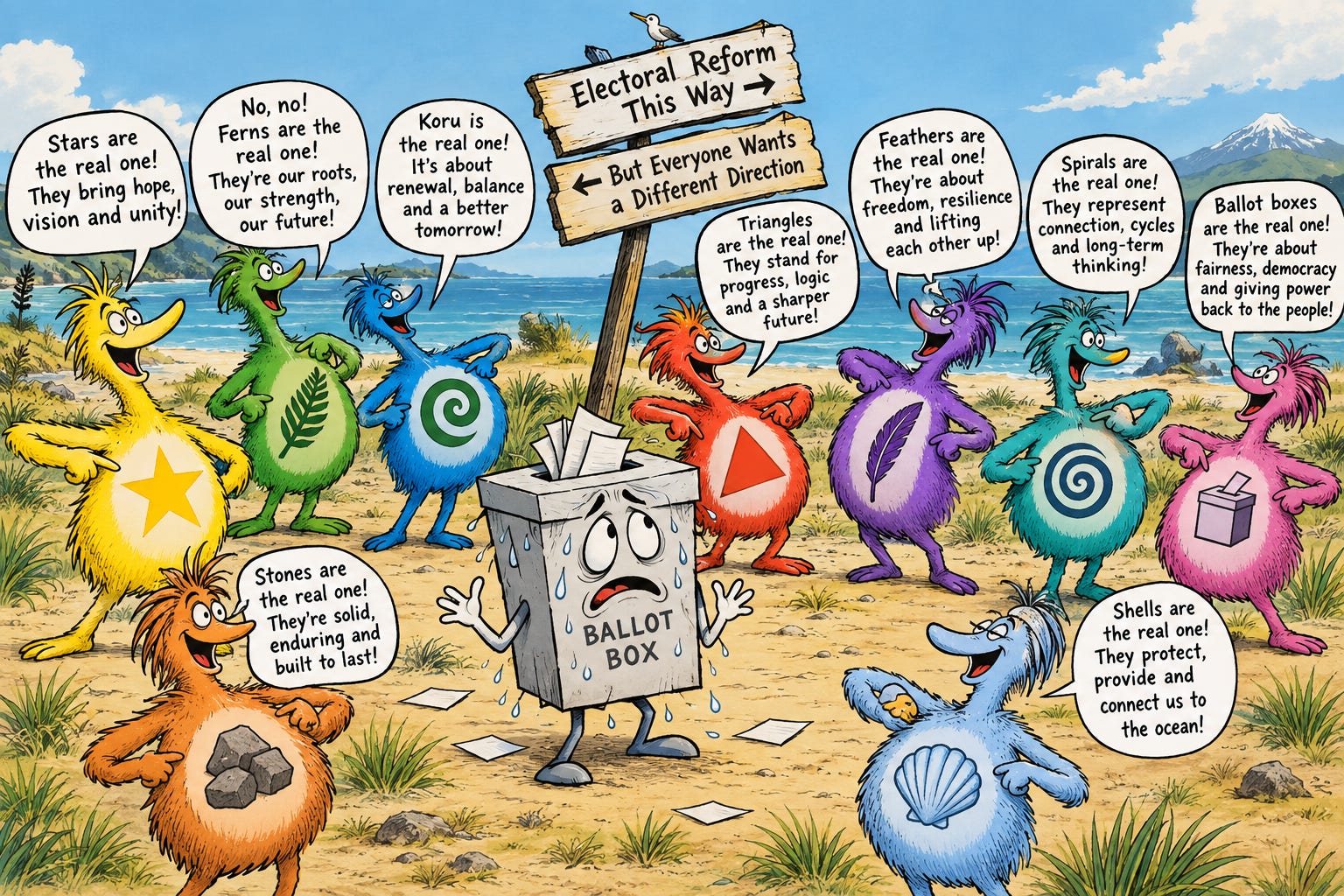
A party can change the electoral system — but only through mechanisms that require broad public legitimacy. And New Zealand no longer has a single public capable of agreeing on what “better” looks like. The country has fractured into multiple political cultures, each with its own constitutional goals, risk tolerances, and identity priorities.
This is the real barrier to reform.
Not the law.
Not the mechanics.
But the absence of a shared nation.
I. The Legal Reality: Yes, a Party Can Change the System — But Only Through Public Consent
Under New Zealand’s constitutional framework, electoral reform requires:
legislation
coalition agreement
public legitimacy
often a referendum
A governing party cannot simply rewrite the rules of democracy by executive fiat. Electoral law is too foundational, too sensitive, and too politically explosive. Any attempt to change it without public endorsement is framed as a power grab — and quickly becomes politically untenable.
This is why every major electoral shift in modern NZ has required a referendum:
1992: Public vote on changing the system
1993: Public vote adopting MMP
2011: Public vote confirming MMP
Even in 2026, when Prime Minister Christopher Luxon floated the idea of another referendum, the reaction was immediate: coalition partners resisted, opposition parties attacked, and Māori political institutions signalled alarm.
The system does not forbid change.
It simply forces change to pass through the public — and the public is no longer unified.
II. The Fragmented Public: New Zealand Is No Longer One Political Culture
New Zealanders talk about “the public” as if it were a single coherent entity. It isn’t. It hasn’t been for years.
Today, New Zealand contains at least four distinct political cultures, each with incompatible constitutional goals:
1. Māori Political Culture
Prioritises:
collective rights
Treaty anchoring
protection of political status
resistance to majoritarian dominance
Any reform that reduces Māori representation or Treaty leverage is opposed — not out of ideology, but rational risk management.
2. Liberal‑Progressive European Culture
Prioritises:
diversity
representation
proportionality
multi‑party governance
This group sees MMP as a safeguard against domination by any single bloc.
3. Conservative European Culture
Prioritises:
stability
majoritarian clarity
“one law for all”
reduced fragmentation
This group often favours FPP‑style simplicity or stronger executive authority.
4. Populist / Anti‑System Culture
Prioritises:
disruption
anti‑bureaucracy
simplification
anti‑elite sentiment
This group wants change — but not the same change as anyone else.
These groups do not share the same constitutional vision.
Therefore, they cannot agree on the same electoral system.
III. Why Consensus on Electoral Reform Is Structurally Impossible
Even if a party proposes a technically sound reform, it immediately becomes a proxy battle for deeper identity conflicts.
1. Māori constitutional interests are defensive by necessity
Any reform that shifts power away from proportionality is interpreted as a threat to Māori representation. This creates automatic resistance.
2. Europeans are divided among themselves
Even within European New Zealanders, there is no unified constitutional preference:
some want stronger majoritarian rule
some want more proportionality
some want citizen‑initiated referendums
some want fewer parties
some want more
There is no single “European view” to negotiate with.
3. MMP itself resists reform
MMP creates:
coalition governments
veto players
small parties with survival incentives
Any reform that threatens small parties is blocked by those same small parties.
4. Historical evidence shows voters are cautious
New Zealanders only change electoral systems when:
the old system is clearly failing
the alternative is clearly better
the public mood is unified
None of those conditions exist today.
IV. The Deeper Structural Reality: New Zealand Is a Multi‑Nation State
The core issue is something I’ve observed repeatedly: New Zealand is no longer a single public with a shared constitutional identity. Māori assert their political priorities with consistency and discipline, and Europeans — even within their own demographic — are split into incompatible camps. These fractures aren’t superficial disagreements; they’re structural divides that make consensus on any electoral reform almost impossible.
This is not a flaw.
It is a structural truth.
New Zealand is a multi‑nation, multi‑culture, multi‑interest society attempting to operate a single electoral system designed for a unified nation. The mismatch between demographic reality and constitutional design makes consensus nearly impossible.
Electoral reform requires:
shared identity
shared constitutional goals
shared trust
shared risk tolerance
New Zealand currently has none of these.
V. So How Likely Is Major Electoral Change?
Low. Extremely low.
Not because the rules forbid it.
But because New Zealand no longer has a single public capable of agreeing on what “better” looks like.
A party can propose reform.
A party can legislate reform.
A party can call a referendum.
But it cannot manufacture a unified nation out of a fragmented one.
And without unity, electoral reform becomes politically impossible.
VI. The Real Question Going Forward
New Zealand’s challenge is no longer “How do we improve the electoral system?”
It is:
How do we design democratic structures for a country that no longer shares a single constitutional identity?
Until that question is confronted, every attempt at reform will fail — not because of legal barriers, but because of sociopolitical reality.