 iSAYSO
Two Systems of Significance: Why Pounamu Is Protected and Gold Is Not
Two Systems of Significance: Why Pounamu Is Protected and Gold Is Not
Two Systems of Significance: Why Pounamu Is Protected and Gold Is Not
By Nigel Gray — Independent Investigator 31 August 2026
(Readers should confirm all legal details with trusted sources.)
 |
The contradiction nobody talks about
New Zealand protects pounamu with absolute legal force.
New Zealand extracts gold with commercial enthusiasm.
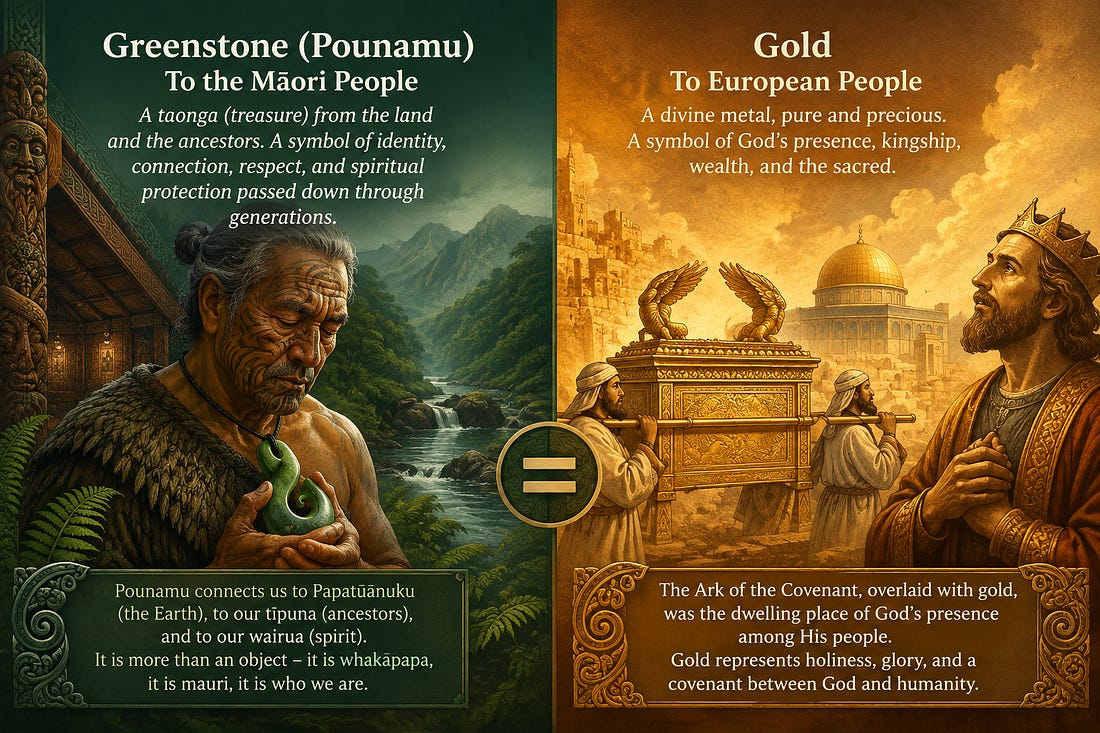
Both materials carry deep cultural significance — one to Māori, one to Europeans — yet the Crown treats them as if they belong to two different universes.
This article examines that contradiction with forensic clarity, because it reveals something important about how the Crown decides what is “sacred,” what is “owned,” and what is “extractable.”
Pounamu: Cultural significance → protection
For Māori, pounamu is:
ancestral
spiritual
symbolic
traded
inherited
fought over
woven into whakapapa
Its significance is recognised in law through the Ngāi Tahu (Pounamu Vesting) Act 1997, which:
vests ownership in Ngāi Tahu
prohibits unauthorized removal
enforces protection with criminal penalties
recognises pounamu as taonga
In other words:
Māori cultural significance → legal protection.
This is consistent, coherent, and philosophically clear.
Gold: Cultural significance → extraction
For Europeans, gold has been culturally significant for thousands of years.
Gold symbolised:
divinity in Ancient Greece
imperial authority in Rome
purity and immortality in Christianity
sacredness in medieval reliquaries
spiritual radiance in iconography
alchemical transformation in the Renaissance
Gold is not just an economic metal.
It is a religious material, a civilizational symbol, and a spiritual artefact.
Yet in New Zealand, gold is treated as:
a Crown-owned mineral
a commercial commodity
subject to 1%–2%–10% royalties
extractable by foreign companies
governed by MBIE under the Crown Minerals Act
In other words:
European cultural significance → ignored.
The contradiction
Here is the structural asymmetry laid bare:
ResourceCultural significance to MāoriCultural significance to EuropeansCrown treatmentPounamuHighLowProtected as taonga; criminal penaltiesGoldNoneHighExtracted at 1% royalty; legacy permits
This raises a question the Crown has never been forced to answer:
Does cultural significance only matter when Māori hold it?
Or does cultural significance matter regardless of who holds it?
If cultural significance is culturally neutral, then gold should be protected.
If cultural significance is culturally specific, the Crown must explain why.
If cultural significance is culturally conditional, the Crown must define the conditions.
None of these answers are easy.
Two worldviews embedded in law
New Zealand’s resource framework is built on two incompatible foundations:
1. Tikanga-based protection (pounamu)
If Māori value it → protect it.
2. Colonial economic extraction (gold)
If Europeans value it → mine it.
This is not a moral judgement.
It is simply a description of how the law is structured.
But when placed side-by-side, the inconsistency becomes impossible to ignore.
Why this matters
Because the Crown’s treatment of cultural significance is not philosophically neutral.
It is:
culturally selective
historically contingent
legally inconsistent
economically biased
And until now, nobody has asked the Crown to explain why.
The OIA that forces the issue
I have submitted an Official Information Act request to:
MBIE
Te Puni Kōkiri
Heritage New Zealand
DOC
Treasury
asking them to provide:
their definitions of cultural significance
their criteria for protection
their criteria for extraction
their frameworks for weighing cultural vs economic significance
their explanations for why pounamu is protected but gold is not
This OIA forces the Crown to articulate something it has never had to define:
Is cultural significance culturally neutral, culturally specific, or culturally conditional?
Whatever answer emerges will reveal the philosophical architecture of New Zealand’s resource law.