 iSAYSO
Why a simple weather article quietly signalled a structural shift in New Zealand agriculture
The One Sentence That Changes Everything
THE PLANNED FAMINE
The One Sentence That Changes Everything
Why a simple weather article quietly signalled a structural shift in New Zealand agriculture
BY NIGEL GRAY INDEPENDENT INVESTGATOR 23 AUGUST 2026
 |
 |
 |
There are moments when a public narrative slips — when a single sentence reveals more than the rest of the article combined. On August 23rd, 1News published a piece about El Niño preparations. Most readers would skim it and move on.
But one line stood out like a flare.
Nigel’s Substack is a reader-supported publication. To receive new posts and support my work, consider becoming a free or paid subscriber.

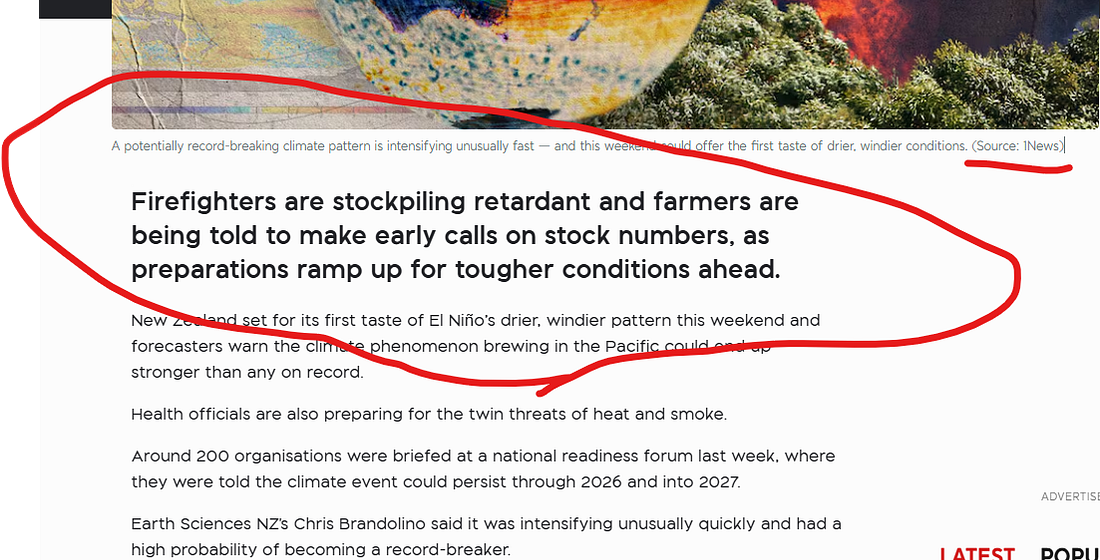
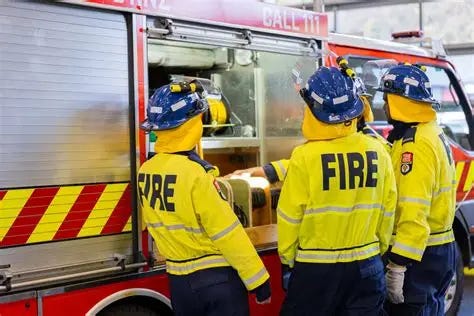
“Firefighters are stockpiling retardant and farmers are being told to make early calls on stock numbers, as preparations ramp up for tougher conditions ahead.”
That sentence does not belong in a weather article.
It is not meteorology.
It is not seasonal advice.
It is structural signalling.
And once you see it, you cannot unsee it.
The Setup: A Weather Story That Isn’t About Weather
The article begins predictably:
El Niño intensifying
dry conditions ahead
fire risk
rainfall modelling
health warnings
water shortages
All standard fare. All familiar. All noise.
Then, suddenly, without transition, the narrative pivots from weather preparedness to livestock reduction.
That pivot is the tell.
 |
Why This Sentence Matters
Let’s apply the investigative plus‑point list — the structural red‑flag criteria — to the sentence.
1. Responsibility Shift
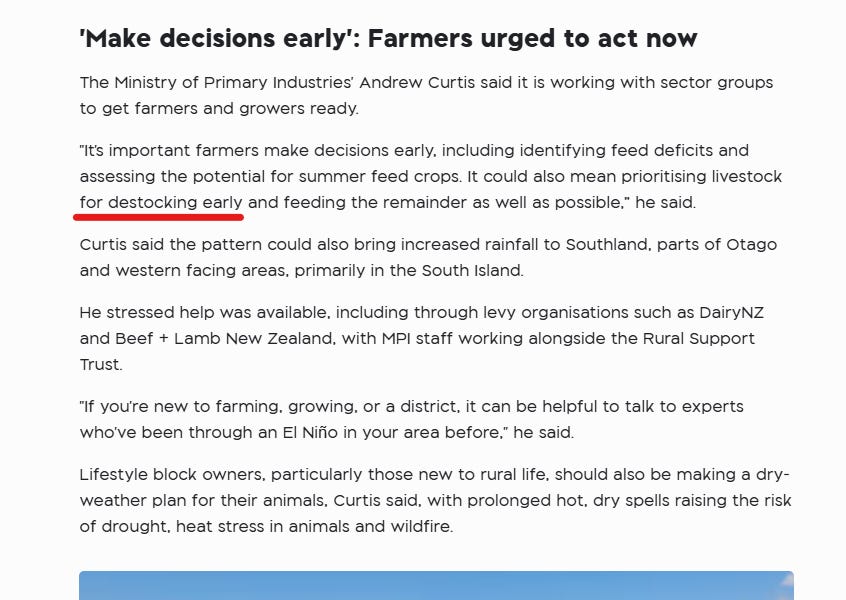
MPI is not advising farmers how to protect stock.
They are advising farmers to reduce stock.
This shifts risk from the state to the farmer.
If the forecast is wrong, the farmer wears the loss.
2. Behavioural Conditioning
Destocking is framed as “best practice.”
Once normalised, it becomes expected.
3. Irreversibility
Selling stock is permanent.
Breeding lines cannot be rebuilt overnight.
Export capacity cannot be restored quickly.
Weather events are temporary.
Destocking is not.
4. Capacity Reduction
New Zealand’s livestock sector is one of its largest export engines.
Destocking reduces national output.
This is not resilience.
This is restructuring.
5. Dependency Creation
Destocking increases reliance on:
levy organisations
government support
rural assistance programmes
Dependency is a strategic outcome.
6. Policy Alignment
Destocking aligns with:
methane reduction targets
nitrogen reduction frameworks
land‑use transition
global agricultural pathways
Protection does not.
Reduction does.
7. Narrative Misplacement
Why is livestock reduction appearing in a fire‑risk article?
Because it is being introduced softly, under the cover of climate.
8. Precedent Setting
Once farmers accept climate‑driven destocking, future reductions become easier to justify.
This is phase one.
The Contradiction That Exposes Intent
New Zealand has world‑class agritech:
automated irrigation grids
robotic milking systems
AI pasture monitoring
GPS‑guided tractors
collar‑based animal telemetry
We can build:
fireproof shelters
automated cooling barns
misting systems
emergency water grids
shade structures
drought‑resilience infrastructure
We have the technology.
We have the capability.
We have the expertise.
Yet MPI’s advice is not:
protect stock
shelter stock
support stock
buffer stock
It is:
destock early
This is not about inability.
It is about intent.
The Data Centre Comparison
Here is where the contradiction becomes impossible to ignore.
New Zealand is investing hundreds of millions into:
data centres
cooling systems
water allocations
digital infrastructure protection
Water is guaranteed for servers.
But not for stock.
Infrastructure is built to protect machines.
But not animals.
If the goal were resilience, the priorities would be reversed.
The Real Meaning of the Sentence
The sentence is not about El Niño.
It is about:
livestock reduction
land‑use transition
emissions alignment
structural change
economic reshaping
policy signalling
It is the only line in the article that:
changes behaviour
changes economics
changes national output
changes farmer autonomy
changes the food system
Everything else is weather noise.
This is the signal.
Why This Matters Now
Because once a structural shift is introduced under the cover of climate, it becomes:
normal
expected
justified
unchallenged
This is how transitions begin.
Not with legislation.
Not with regulation.
Not with policy papers.
But with a single sentence in a weather article.