 iSAYSO
The Average New Zealander: A System Under Strain
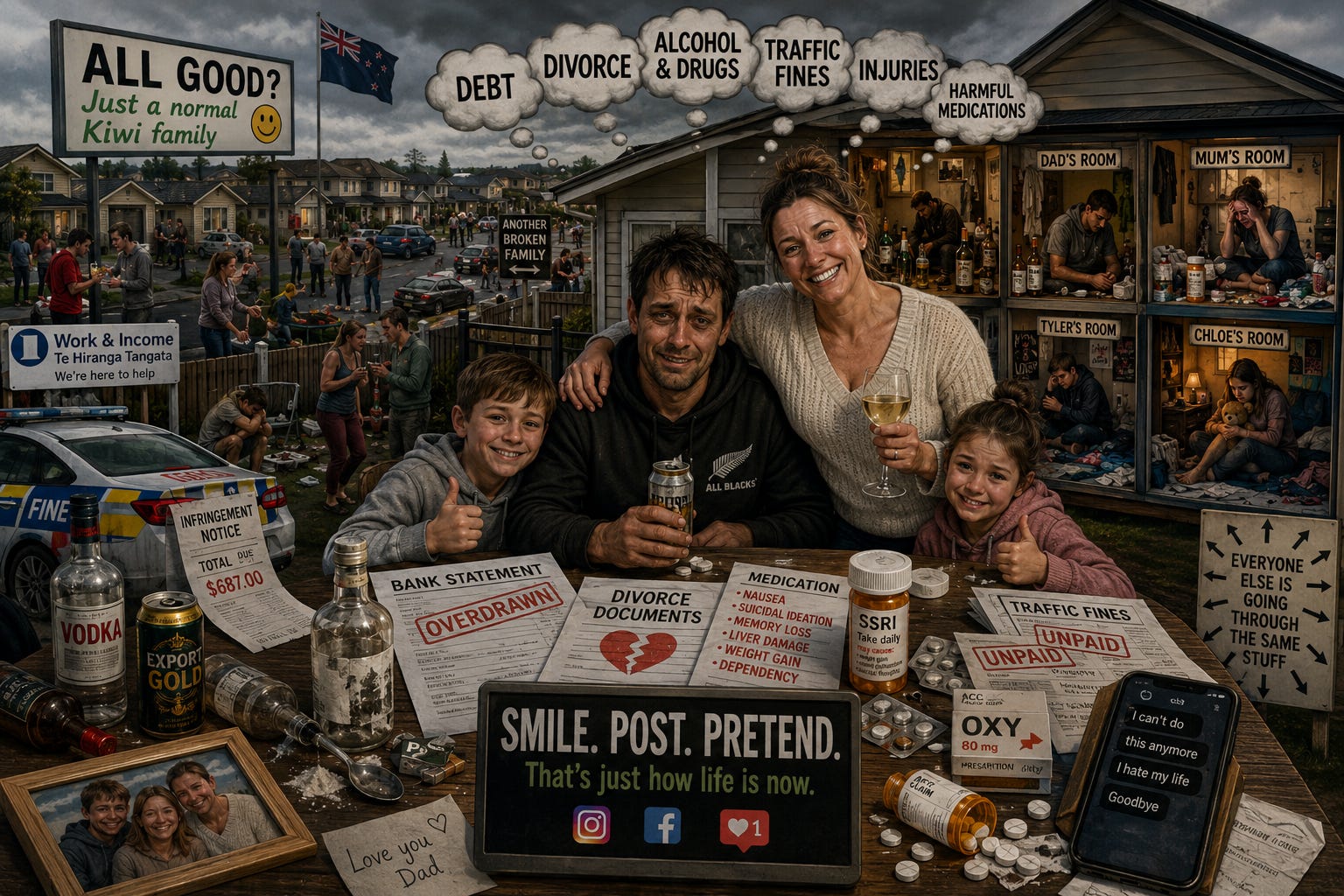
The Average New Zealander: A System Under Strain
A calm, analytical examination of what most families are actually facing
New Zealand has long held onto a comforting myth: that most families are stable, well‑adjusted, and quietly getting on with life.
But when you look closely at the pressures people face, a different picture emerges — not of personal failure, but of systemic strain.
The average New Zealander is not dysfunctional.
They are navigating a system that produces dysfunction as a predictable output.
This article is not about blaming New Zealanders.
It is about recognising the shared pressures almost everyone is living under — and why change is needed.
Financial Stress: The First Fracture Point
Financial pressure is the most common stressor in New Zealand households.
Around 48% of New Zealanders live paycheck to paycheck (Consumer NZ).
1 in 4 households cannot cover an unexpected $500 expense.
Household debt has risen sharply, especially among under‑40s.
Financial instability is strongly correlated with relationship breakdown, substance use, mental distress, and legal trouble.
This is not fringe — it is normal.
Relationship Breakdown: A Common Experience
New Zealand’s family structure is far more fragile than the myth suggests.
7,000–8,000 divorces per year (Stats NZ).
Around 40% of children experience parental separation before age 18.
Most families are not “well‑adjusted” — they are adapting to chronic stress.
Alcohol, Drugs, and Coping Mechanisms
New Zealand’s substance‑use profile reflects systemic pressure, not moral failure.
NZ has one of the highest binge‑drinking rates in the OECD.
1 in 5 adults engage in hazardous drinking.
Alcohol harm costs NZ $7.85 billion per year (BERL).
Methamphetamine use remains disproportionately high compared to comparable nations.
These behaviours are coping mechanisms in a high‑pressure environment.
Legal and Administrative Cascades
Small legal issues often snowball into life‑altering consequences.
Over 2 million traffic infringements are issued annually.
Licence suspensions frequently lead to job loss, especially in rural and working‑class communities.
Job loss increases the likelihood of secondary offending, domestic conflict, and financial collapse.
This is a cascade system — one small event triggers a chain reaction.
Domestic Violence: A Systemic Indicator
New Zealand’s domestic violence statistics are not outliers — they are signals of systemic strain.
Police attend over 100,000 family harm incidents per year — one every five minutes.
NZ ranks among the highest in the developed world for intimate partner violence.
This is not about “bad people.”
It is about a system that produces chronic stress and conflict.
Mental Distress: A National Pattern
Mental distress is widespread and rising.
1 in 5 adults experience significant mental distress each year.
Youth anxiety and depression rates have doubled in the last decade.
This is not a minority issue — it is a national pattern.
Injuries: The Hidden Pressure No One Talks About
Injuries are one of the most overlooked contributors to household stress — and they are far more common than most people realise.
ACC receives over 2 million injury claims per year.
Around 700,000 New Zealanders suffer a work‑related injury annually.
Fatigue, long hours, and economic pressure significantly increase workplace accident rates.
Many injured workers continue working because they cannot afford time off, worsening long‑term outcomes.
Injuries create a silent burden:
chronic pain
reduced mobility
reduced income
increased irritability
relationship strain
reliance on pain medication
higher risk of secondary accidents
This is not rare.
It is a widespread, normalised part of life for a large portion of the population.
Medication, DTC Advertising, and the Normalisation of Chemical Coping
New Zealand is one of only two countries on Earth that allow direct‑to‑consumer (DTC) prescription drug advertising.
This has consequences:
Around one million New Zealanders take antidepressants or anti‑anxiety medications annually.
NZ’s antidepressant prescribing rate is among the highest per capita in the OECD.
Long‑term use of SSRIs, benzodiazepines, and antipsychotics carries risks including dependency, withdrawal syndromes, emotional blunting, and nutrient depletion.
Studies show up to 56% of long‑term antidepressant users experience withdrawal symptoms when attempting to stop.
DTC advertising frames medication as a normal, safe, everyday solution, even when risks are significant.
Chemical coping has become culturally normalised — not because people are weak, but because the system is overwhelming.
Media Fear Cycles and Social Fragmentation
Mainstream media incentives amplify fear and division.
Over 60% of New Zealanders believe the media exaggerates threats (AUT Trust Survey).
Fear‑based reporting increases perceived danger even when crime rates are stable.
Communities become fragmented not because people are divided —
but because fear is profitable.
The Unifying Insight: We Have More in Common Than We Think
When you step back, a pattern emerges:
financial strain
relationship breakdown
substance use
legal cascades
domestic conflict
mental distress
injuries and chronic pain
medication reliance
media‑driven fear
These are not fringe experiences.
They are common experiences shared by a majority of New Zealanders in some form.
The average New Zealander is not failing.
They are responding to the same pressures everyone else is facing.
People feel isolated not because they are alone —
but because no one realises how widespread these pressures are.
The Need for Change
If dysfunction is systemic, then solutions must be systemic.
New Zealand needs:
governance structures that reduce punitive cascades
economic policies that stabilise households
reform of DTC advertising
genuine mental health support
safer workplace conditions
community‑building initiatives
transparent institutions
media incentives that reward accuracy, not fear
The point is simple:
New Zealanders are not broken.
The system is.
And systems can be changed.