 iSAYSO
How to Claim Back New Zealand.
This is a fast read, but if you want to get to the Swiss information on how they do it, go to the bottom of the 7th page.
How to Claim Back New Zealand.
And Why We Urgently Need to Do So. Amy Brooke Jun 29, 2026
In her book “The March of Folly”, historian Barbara Tuchman, trawling through history, pointed out that governments get most decisions wrong.
The implications of this are considerable. Yet few New Zealanders would argue with her contention, looking at the devastating consequences inflicted on this country as the result of years, indeed decades of our governments’ poor decision making, which hasn’t improved. A succession of egocentric, apparently intellectually challenged Prime Ministers run their parties as if they were CEOs, dominating all decision-making and making their MPs toe the line to avoid losing pay and position.
This simply couldn’t happen in Switzerland, the most successful democracy in the world. However, further along this will be illustrated so we can see how we, too, could actually control our politicians, instead of being virtually ruled by them.
As for Prime Ministers simply pulling rank on their MPs, I can recall so many instances of this happening. For example, in relation to Christopher Luxon alone, I well recall his and his deputy Nicola Willis’s condescending putdown of National Party MP Maureen Pugh when the latter stated that she was unconvinced that human activity contributed to climate change. Pugh was referring specifically to the claim that Cyclone Gabrielle had been because of this. She suggested that much of the ensuing devastation was due to poor tree management. Luxon, apparently as ill-informed on this issue as he is on so many others, declared that climate denial was unacceptable, saying there was no place for “climate deniers” or “minimalisers” in the caucus. Willis stated that Pugh had a lot of reading to do. Pugh then did a very quick turnaround, basically saying she now accepted they would need to curb greenhouse gas emissions.
Apart from the sheer folly of New Zealanders being over-taxed and over-controlled in so many aspects of our life now in an attempt to reduce carbon emissions, when our government is well aware we are such a small country that nothing we can do can make any difference at all, apparently Willis has even more reading to do.
She seems unaware that over the last 12 months we have witnessed the collapse of the global consensus about climate change. What we are encountering is the demise of climate catastrophism. A paper published on the 7th of April by researchers responsible for creating the models that will underpin the United Nations next climate Bible, the 7th Assessment Report, has pronounced the last rites, pointing out that prognostications of doom have become implausible. Yet these have been underpinning the policies of most western governments including New Zealand, where we have not only been demonising CO2, but mis-spending accumulatively billions of dollars, and overestimating the greenhouse effects of methane.
Our governments have foolishly endorsed the impossible Net Zero by 2050 and signed us up to the prohibitively costly Paris Accord. China and India are making fools of us by using more and more coal, China 40% more than the rest of the world combined. India is going full throttle on coal to underpin its economic growth even though it is committed to reaching Net Zero, using well over a billion tonnes of coal annually.
As is pointed out elsewhere China works to achieve maximum competitive advantage by selling its green paraphernalia to the world, while boasting about its investment in renewable energy. However, China opened 50 coal-fired power stations last year compared with 25 in 2024. Several Asian countries have reverted to coal to generate electricity, with Australian coal producers one of the winners. In the Netherlands, another country run by deep green politicians for many years, the prospective closure of its massive gas field has been delayed several times.
It will be interesting to take a look in a future article at the damage some politicians in particular have done to this country. Arguably, former Prime Minister John Key would be among the top few. It was Key who committed us to the Paris Agreement which would involve buying carbon credits by paying other countries to reduce emissions. The original intent to purchase more than 200 million carbon credits could add up to $14 billion dollars. New Zealand First is now advocating retreating from the Paris Agreement.
The sheer absurdity of the carbon credits scheme has long been apparent to most New Zealanders, very many refusing to endorse our government’s slavish adherence to climate catastrophising, with reputable scientists pointing out that there is in fact no such thing as a scientific consensus that CO2 causes global warming. The Australian scientist, Ian Plimer, in a Quadrant article of December 2025, headed “Climate Lunacy and the Collapse of Scientific Integrity” is one among a number of world-renowned scientists who has exhaustively examined and refuted the arguments that we need to control our emissions, no matter the cost to us in doing so.
Plimer points out that atmospheric carbon dioxide is invisible, tasteless and odourless: it is not a pollutant – it is plant food and has been beneficial to life on earth for billions of years. He also points out that if all carbon dioxide were removed from the atmosphere, it would require the death of humans. New Zealand is still committed to Net Zero, reducing emissions from all sectors. However, it is gradually being abandoned by more and more other countries. Plimer also argues that no national energy policy can be underpinned by science that is contentious, fraudulent, misleading, deceptive, and demonstrably incorrect. Yet this is what our politicians are endorsing. However, even the gullible Greta Thunberg is now centre-staging her Palestinian activism instead.
The culpability of our mainstream media is no doubt one of the reasons why our politicians have remained so very ignorant about what is in reality a huge hoax that has been inflicted on us all – costing us dearly in terms of productivity, increased taxation in so many areas and overreaching government control.
Stuff, the New Zealand Herald and other mainstream newspaper editors have long stated that they have no intention of publishing any articles challenging the propaganda constantly inflicted on the public. So much for the debate needed to arrive at the truth of issues, and for the previously vaunted ”freedom of the press”. These media are deliberately practising censorship, with powerful financial interests apparently underpinning their stance. We would do well to refuse to subscribe to either of these and similar publications constantly asking for financial contributions.
Yet is that really enough to excuse our representatives from failing to do their own research or encouraging their staff to do so? To give her due credit, Nicola Willis appears to be changing her stance, showing a marked reluctance to embrace the prohibitively costly carbon credit nonsense. Our biggest liability in this area is apparently Climate Minister Simon Watts, by no means regarded as the sharpest tool in the box, who accompanied the Prime Minister on a trip to several Asian countries last year where memoranda of understanding were signed with Singapore, Thailand and the Philippines to pave the way for possible purchase of carbon credits in the future. Willis has not endorsed this.
Key himself was long regarded as dominating his cabinet, as was Labour leader Helen Clark when formerly Prime Minister. Long antagonistic to the United States, she allowed an astonishing succession of high-ranking Chinese military personnel to be shown around our military bases. It was Clark, too, who was responsible for dismantling the combat wing of our Air Force, claiming what was palpably untrue, even at the time, that we lived “in an incredibly benign strategic environment”, which enabled defence cuts to be made. And yet, one of the three main obligations of government is the defence of the realm.
As we examine the overbearing ways in which our Prime Ministers impose their rule on the members of parliament, we see how badly electoral reform is needed, genuine electoral reform, not mere tinkering with the system. Luxon’s practice of presiding over the National Party as if he were its CEO was also obvious when pro-life National MP, Simon O’Connor, celebrated the US Supreme Court’s Roe V Wade decision and posted “Today is a good day” on his Facebook site, with a pro-life comment. Luxon told him to take it down.
What happens to so many MPs’ courage? O’Connor later wrongly said he had not been gagged. His excuse for not standing up to Luxon was that he had taken it down because it had sown dissent, with some finding it hurtful.
Poor dears.
Even worse, an apparent favourite of Luxon’s, pro-life Simeon Brown, also apologised for supporting O’Connor in a post and removed his support! Many New Zealanders would find their actions spineless, particularly given that others like pro-abortion, deputy Prime Minister Nicola Willis said she was “gutted for America”, and Jacinda Ardern and ACT leader David Seymour showed no hesitation in voicing their disapproval of the Supreme Court’s decision.
It was Ardern, as Prime Minister, presiding over the worst and most incompetent government we have ever had, who had abortion – the deliberate killing of a defenceless, unborn boy or girl child – removed from legislation decriminalising abortion so that it would now be treated merely as a health issue. It is far from that – particularly for a living, pre-born child. And for Ardern and David Seymour, among others, to vote for a baby being aborted right up to the time of birth, and also for medical care and comfort to be withheld from such a child who then dies, probably crying its way out of this world, is inexcusable.
Apart from our overbearing Prime Ministers, who else behind the scenes is actually dominating the decision making in this country? Immigration minister Erica Stanford is far from pleased at finding that public service officials within the office of Business, Immigration and Employment (MBIE) have misled her, and basically parliament, using creative accounting to hide the failure of a $33 million biometric technology project over seven years. Reportedly this project had cycled through a dozen project managers who brushed aside warnings that it wouldn’t deliver and gave the minister misleading advice about the project.
I was also interested to receive a typically unhelpful response when I contacted Minister Simeon Brown in relation to New Zealand Post’s recent closing of a well-located local post office. This closure requires residents now to have to travel 20 kilometres into Nelson city itself to try to find a park in the main street – where parking is often impossible – to use a local bookstore instead and perhaps carry a heavy parcel some distance. Petitions signed by approximately 2000 local residents, pointing out the distance they now have to travel, using precious fuel, has simply been ignored by NZ Post’s bureaucracy. And Brown. As he is the Minister for State Owned Enterprises, presiding over New Zealand Post, he could be expected to check with them why they are misleading the public by promising that nobody would have to go more than 5K to the nearest post office, which is quite untrue.
Brown’s reply was basically a brush-off, including the statement that he had made his expectations clear to New Zealand Post that it should operate a reliable and customer focused business – which it is far from doing in other areas as well. However, what I found particularly interesting when I got back to Simeon Brown’s office to emphasise how unsatisfactory this situation was, is that I received an unsigned letter from his office stating that the writer had made note of my e-mail below and passed it on to the team for their consideration.
I replied, pointing out that I was not asking the ministerial team to take my e-mail into consideration – I was specifically asking Simeon Brown himself to read it, saying I wanted to ensure he did. I pointed out that when the public send an e-mail to an MP or minister, they’re not sending it to a team – they’re sending it to this particular person. I also pointed out that the writer should be well aware that we don’t elect a ministerial team to parliament to represent our interests – we send MPs as our representatives.
I have had no reply. But I’m reminded of a friend who was an MP contacting me late at night to say he hadn’t heard from me for many months in relation to the issues of the day. This was interesting because I was writing a regular, topical column and had included him in my mailouts. They were obviously not getting to him. This particular one very probably had because I sent it late at night when his office staff would not be available to intercept it, and he himself had checked his email.
And then there is the current finding that bureaucrats can withhold important reports from local councillors and mayors elected by the public.
So who is running the country? And what about the changes being made to proposals after they have already passed from the select committee – such as the recent sneaky attempt to control home-schooling parents – possibly requiring them to adopt the state curricula? The home-schooled syllabus and children with whom I have been involved are academically streets ahead of our children in state schools. This proposal had to be abandoned, given the justifiable public outcry.
With MPs very probably getting hundreds of emails a day, it’s up to staff to report back to them on the issues raised. Probably a much better way of making your views known is to ring Parliament – 04 817 9999 – asking to be put through to the required office, and then state your concerns. Unfortunately, by far the majority of ministers and MPs have no one answering the phone, as they should, so one may have to leave a message, asking that it be passed on to that representative.
Is all this good enough for New Zealanders? Of course not. And what we need is genuine electoral reform. Given that this is the case, we should be looking for the country regarded as the most successful democracy in the world, and of course this is Switzerland, which practises direct democracy.
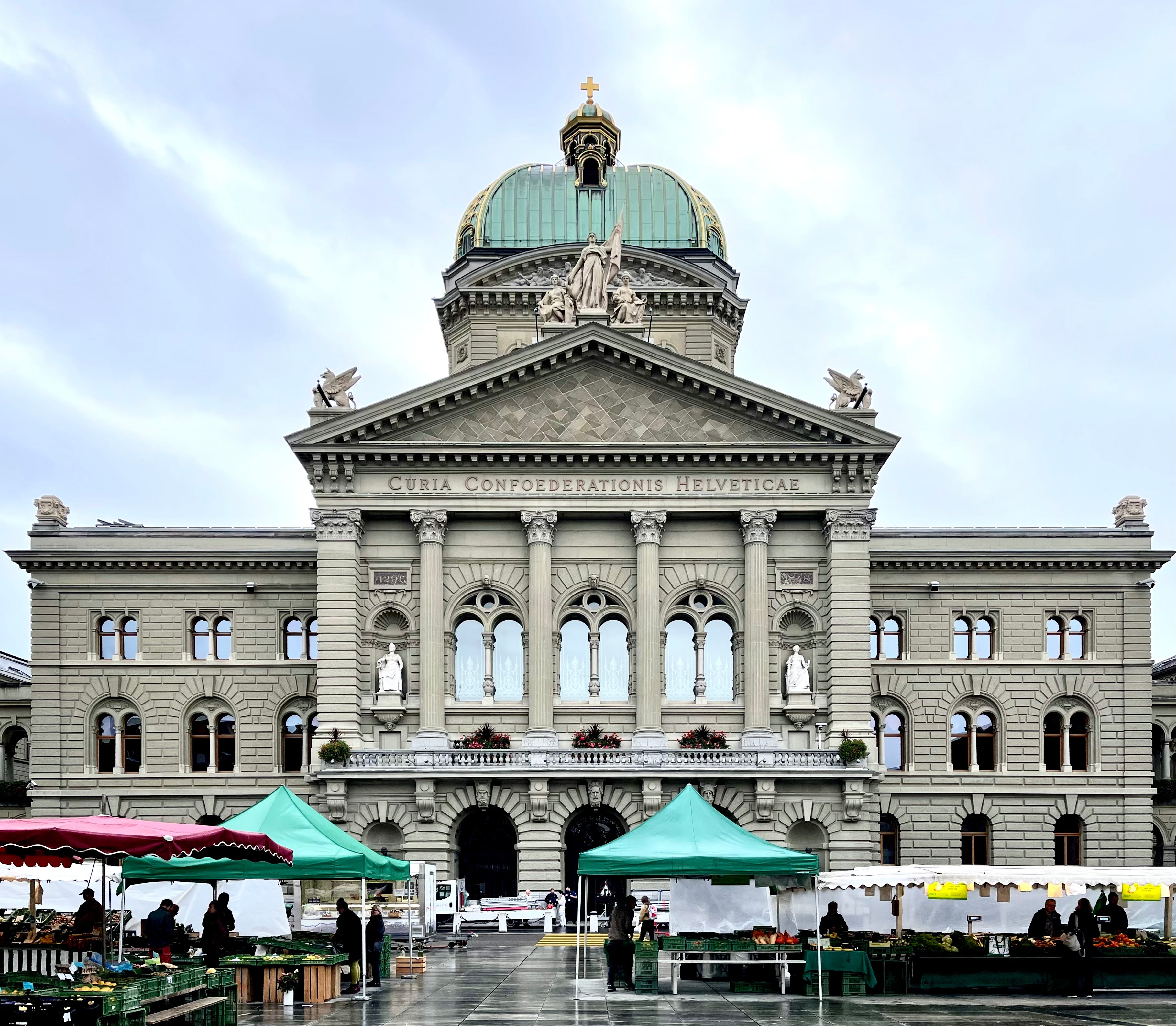
The Swiss Federal Palace, Bern
Swiss members of their parliament are encouraged to hold down day jobs in the trades or professions or elsewhere. Their parliament meets only four times a year, each session lasting only three weeks. And even given double the population of New Zealand, there are only seven members in the Swiss cabinet. Most importantly, unlike the way our overbearing leaders like Christopher Luxon, John Key, Jacinda Ardern, Helen Clark and so on do so, the President of Switzerland does not dominate the cabinet – he or she is regarded as simply primus inter pares – first among equals – and must step down after one year.
Genuine electoral reform in New Zealand should embrace this concept – that an entrenched leader does not dominate our cabinet, but must step down after one year. Moreover, we have twenty ministers in cabinet, as well as some from outside – in contrast to the merely seven in the Swiss cabinet, where it is usually the finance minister who steps up to being the president after a year. The seven ministers’ portfolios embrace the Minister of Finance, the Minister of Home Affairs, the Minister of Justice and Police, and so on. Basically they serve as the collective head of the Swiss government operating as a combined cabinet in a collective presidency. Given the very obvious advantages of such an arrangement, why do we allow strong-minded Prime Ministers such as we have had in recent years to dig in and virtually rule the country, according to their own agenda – like Key’s attempt to change our flag?
Genuine electoral reform cannot do better than the Swiss system where the people regularly vote on laws and referendums and have the power to challenge legislation, or proposed constitutional amendments. In contrast, New Zealand, given our MPs’ pusillanimity, has seen to it over the years that although all New Zealanders are supposed to be equal, those with even a smidgen of Maori genetic inheritance are regarded as more equal to all other New Zealanders. i.e. given special funding, rights and privileges.
Although there are four distinctly separate ethnic groups in Switzerland, this country does not grant special rights to any group based on racist grounds. In fact, Swiss law operates on the principle of equal treatment within its federal constitution. Given that the Treaty of Waitangi intended to do the same thing – grant equal rights and responsibilities to all New Zealanders – it is at the feet of our government that can be laid the blame for this principle of equality having been totally disregarded over the years to favour those of even minimal, part-Maori descent – an unpardonable shame on our country.
However, the most important provision for the Swiss people fought for is the Facultative Referendum. As the ultimate decision-makers in the Swiss Federal Assembly, Swiss citizens retain the right to challenge any parliamentary law in a public ballot – if they can gain 50,000 signatures. As we have half the population of Switzerland, about 25,000 signatures would be enough in this country to compel legislation to sit and wait for 100 days. People can then accept or decline it, and the decision of the Swiss people is final.
For New Zealanders to adopt the 100 days Swiss system – so that we can stop the constant flow of legislation with which we do not agree – and about which we are not consulted – would be enough to ensure very effective electoral reform in this country. Add to this the provision that the Prime Minister can hold office for one year only and then has to step down, and the country would be transformed.
Please access and support the proposal as laid out in www.100days.co.nz. All we need is a tipping point of New Zealanders to support this initiative – to let others know and encourage them to support it – and we would win back this country.
New Zealanders need to tell their MPs that we want them to back the 100 Days…
To have a philanthropist on board with enough vision to make the very real possibilities of the 100 Days more widely known would be an enormous help. A backer with vision enough to spread the word would hasten the day.
The tools to reclaim this country already exist. What’s missing is the will to use them. It is high time to do so, for we are losing so much.
AI OVERVIEW
In her book “The March of Folly”, historian Barbar.txt
The core takeaway is that the document you shared is a political opinion essay arguing that New Zealand’s political system is failing due to poor decision‑making, overcentralised prime‑ministerial power, bureaucratic dominance, media bias, and misguided climate policy — and that New Zealand should adopt elements of Swiss direct democracy, especially the 100 Days referendum mechanism, to restore public control.
Below is a structured, detailed summary grounded directly in the text, with brief quoted lines for accuracy.
🧭 Central Argument
New Zealand’s governments — across multiple decades and parties — are portrayed as consistently making poor decisions, echoing Barbara Tuchman’s claim that governments “get most decisions wrong.” The author argues that:
“New Zealanders would argue with her contention, looking at the devastating consequences inflicted on this country as the result of years… of our governments’ poor decision making.”
The essay frames this as a systemic failure rather than the fault of any single leader.
🏛️ Critique of Prime‑Ministerial Power
The author claims New Zealand Prime Ministers behave like CEOs, dominating caucus and suppressing dissent. Examples include:
- Christopher Luxon’s reprimand of Maureen Pugh over climate comments
- Luxon telling Simon O’Connor to remove a pro‑life post
- Simeon Brown apologising for supporting O’Connor
- Helen Clark’s dominance of cabinet and defence cuts
- Jacinda Ardern’s abortion law reforms
The essay argues that MPs lose courage under party discipline and fear of losing position.
🌏 Climate Policy Critique
A major portion of the document argues that New Zealand’s climate policies are misguided, costly, and based on flawed assumptions. The author cites:
“the collapse of the global consensus about climate change” “prognostications of doom have become implausible”
The essay claims:
- CO₂ is wrongly demonised
- Methane effects are overstated
- Net Zero 2050 is impossible
- Carbon credits are wasteful
- China and India undermine global emissions efforts
- NZ media censors dissenting scientific views
The author references Ian Plimer’s criticisms of climate science.
📰 Media and Bureaucracy
The essay argues mainstream media (Stuff, NZ Herald) refuse to publish dissenting views, contributing to public ignorance. Bureaucracy is portrayed as unaccountable and misleading ministers, e.g.:
- MBIE’s failed $33m biometric project
- NZ Post closing local branches despite public petitions
- Ministerial staff filtering public emails
- Councils being denied access to key reports
This leads to the question:
“So who is running the country?”
🇨🇭 Swiss Direct Democracy as the Solution
The author presents Switzerland as the model New Zealand should adopt.
Key features highlighted:
- Parliament meets only four times a year
- MPs keep day jobs
- Cabinet has only seven members
- President serves one year, is primus inter pares
- No ethnic group receives special legal privileges
- Citizens can challenge any law with 50,000 signatures
- Laws pause for 100 days pending public vote
The essay argues New Zealand should adopt:
- A one‑year Prime Ministerial term
- A 100‑day referendum system
- Citizen power to halt legislation
- Equal treatment for all ethnic groups
The author urges readers to support the 100 Days movement:
“Please access and support the proposal as laid out in www.100days.co.nz.”
🧩 Underlying Themes
Across the essay, several consistent themes emerge:
- Distrust of centralised political authority
- Distrust of climate policy and scientific consensus
- Distrust of media and bureaucracy
- Advocacy for direct democracy
- Advocacy for equal legal treatment of all citizens
- Concern about erosion of public influence over government